One in 6 of our brightest, bravest and kindest veterans, teachers, doctors, lawyers, family members and friends will share an unwelcome commonality in the last decades of their lives — declining brain function due to dementia.
Alzheimer’s disease and many other brain diseases can lead to a progressive decline in memory, thinking and planning, perception, language and behavior, a condition we call dementia.
ACT NOW
Typically, any one person with dementia has two or more diseases that can explain their symptoms. Dementia, which affects about half a million Texans and their families, and costs the state nearly $4 billion each year in medical cost, can start as early as a person’s 30s, although typically symptoms begin in one’s 70s and 80s. South Texas appears particularly vulnerable, with reports suggesting a 50% higher risk.
However, there is hope that we can conquer this scourge.
On Nov. 4, when Texans go to the polls, they will be asked to consider Proposition 14, a historic measure — approved for this year’s ballot by the 89th Legislature — that aims to bring the grand vision, creativity, energy and resolve that characterizes our state to tackle the challenge of dementia.
The Dementia Prevention and Research Institute of Texas, or DPRIT, that the Legislature proposed, with $3 billion in support over 10 years, will empower academic, nonprofit and private institutions, as well as companies, with the best ideas to prevent, diagnose, treat and care for people with dementia across Texas.
In San Antonio, the University of Texas System — backed by more than $40 million in generous community support — is building a state-of-the-art facility that will include the Glenn Biggs Institute for Alzheimer’s and Neurodegenerative Diseases.
This five-story, $100 million Center for Brain Health at the University of Texas at San Antonio Health Science Center, set to open Dec. 10, will be a hub for groundbreaking research, advanced diagnostics, and innovative treatments aimed at preventing, diagnosing and managing dementia and a range of neurodegenerative diseases.
The center will bring together leading experts, innovative technology and compassionate care, offering hope and improved quality of life for patients, caregivers and their families throughout the region.
This initiative will also benefit from DPRIT’s support to attract the best physicians and researchers to Texas and fund development of the latest technology and brain health care.
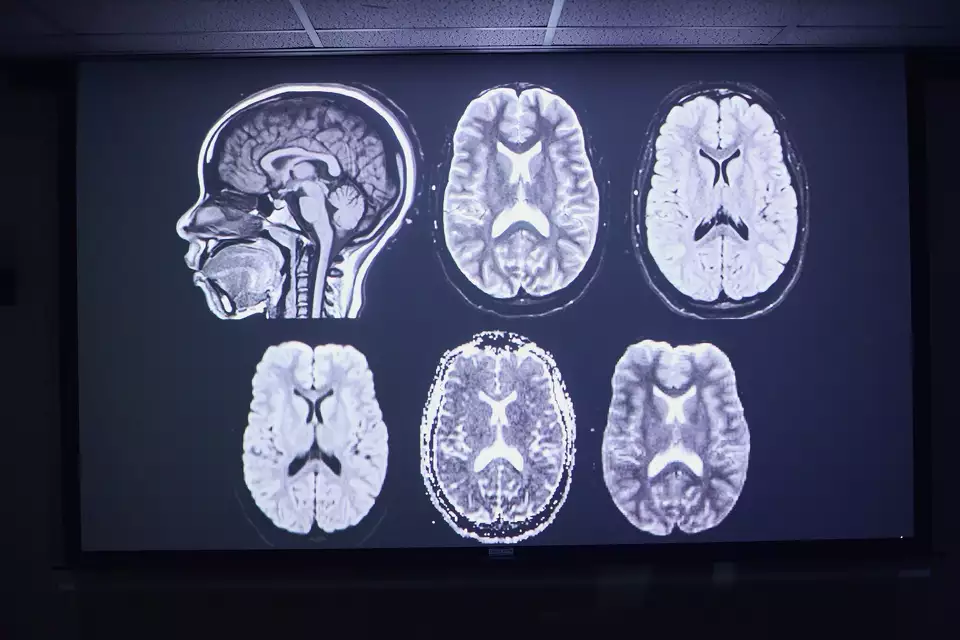
Mohamad Habes leads a team at UT San Antonio Health Science Center in developing an artificial intelligence tool that counts brain lesions on MRIs in seconds. We are learning ways to preserve brain health, build brain resilience and prevent symptoms from developing, our guest columnist writes.
Mohamad Habes leads a team at UT San Antonio Health Science Center in developing an artificial intelligence tool that counts brain lesions on MRIs in seconds. We are learning ways to preserve brain health, build brain resilience and prevent symptoms from developing, our guest columnist writes.
Courtesy of UT Health San Antonio
Today, there is every reason to diagnose dementia early. Various types of dementia can be parsed out with genetics and blood tests, with specialized imaging methods that can find toxic proteins in the living brain through PET scans, studying brain structure at the resolution of a hair, and brain function from minute to minute with state-of-the-art MRIs.
The identified diseases can be treated with a wide range of new and repurposed drugs. Additionally, new ways to treat the brain with currents, magnets and ultrasound are emerging.
During the next decade, a cocktail of these therapies will likely make dementia an illness one can manage and live with, the same way we now manage diabetes. We are learning ways to provide speech, occupational, physical, music, art and other therapies to retain and restore some brain abilities that dementia attacks.
Equally, we are learning ways to preserve brain health, build brain resilience and prevent symptoms from developing with attention to exercise, sleep, diet, social connections, meaningful work and hobbies, stress management, hearing, vision, vascular risk factors and environmental factors.
In this decade, every person will, we believe, have annual brain health assessments to preserve their brain health and prevent stroke, dementia, Parkinson’s and other brain diseases.
Dr. Sudha Seshadri is a world-renowned expert in Alzheimer’s disease and dementia, a professor of neurology and founding director of the Glenn Biggs Institute for Alzheimer’s and Neurodegenerative Diseases at the University of Texas at San Antonio Health Science Center.